Choosing the right mesh for filtration is essential for optimal performance in various applications. According to Dr. Emma Carter, a leading filtration expert, "The right mesh can make or break your filtration process." This emphasizes the impact of mesh selection on efficiency and effectiveness.
When considering how to choose the right mesh for filtration, one must pay attention to several factors. The size of the particles you need to filter is crucial. A mesh with too large openings may allow contaminants to pass through, while a mesh too fine can impede flow and efficiency. Finding the balance can be challenging.
Many professionals overlook the importance of material composition, which can affect durability and chemical compatibility. Regularly assessing mesh conditions is also vital. Over time, even the best mesh can degrade, leading to inefficient filtration. This ongoing evaluation is essential for maintaining reliability in filtration systems.
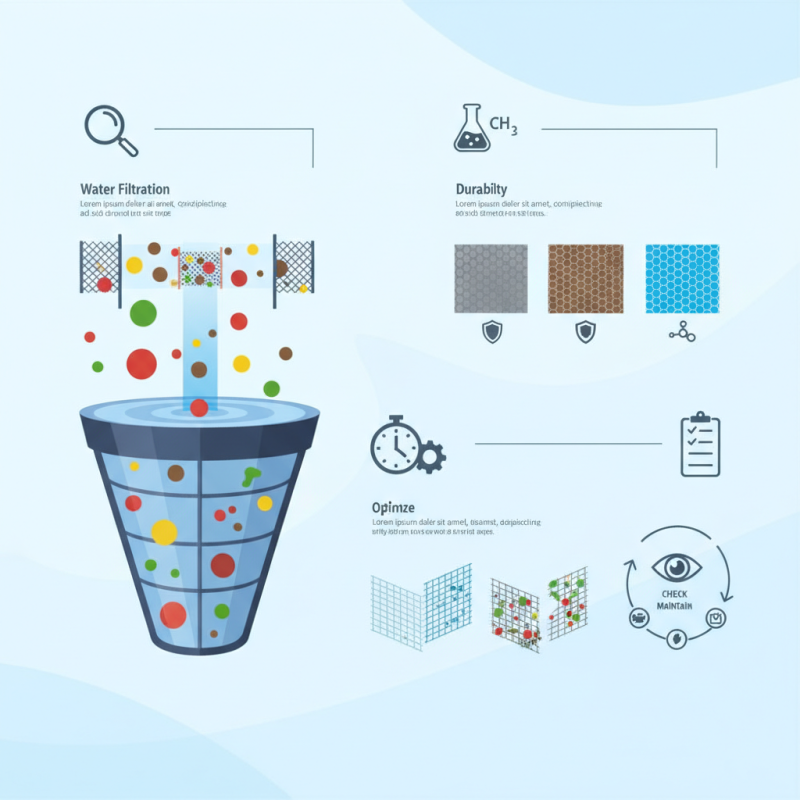
Filtration plays a vital role across various industries, ensuring the quality of products and safety in operations. In pharmaceuticals, the need for purity is non-negotiable. Even the slightest contamination can lead to serious consequences. Filtration systems help maintain sterility and eliminate harmful particles from compounds.
The food and beverage sector also relies heavily on effective filtration. Impurities in liquids can affect taste, safety, and shelf life. Striking the right balance in filtration design is essential. However, some companies overlook detailed specifications, which can lead to significant waste or product recalls.
In water treatment, filtration protects public health. Contaminated water can cause outbreaks. The right mesh selection can filter harmful substances effectively. Yet, some are tempted to cut costs by using inadequate materials, resulting in long-term consequences. Choosing the right filtration mesh is not just about compliance; it’s about trust and reliability in every drop. The repercussions of poor choices can echo through supply chains, bringing unforeseen challenges.
When selecting the appropriate mesh for filtration systems, understanding different mesh materials is vital. Common options include stainless steel, nylon, and polypropylene. Each material has unique properties that make it suitable for specific applications.
Stainless steel mesh is renowned for its strength and durability. A report from the Filtration Society indicates that this type of mesh can operate at high temperatures and withstand corrosive environments. However, it can be more expensive than other options.
Conversely, nylon mesh is lightweight and resistant to moisture, making it ideal for water filtration. Yet, its resistance can weaken under extreme heat.
Polypropylene mesh offers a cost-effective solution with decent chemical resistance. According to data from the American Filtration Association, it's widely used in the food processing industry.
Each type of mesh has pros and cons. Choosing poorly can lead to reduced filtration efficiency or premature failure. Evaluating specific operational needs is crucial for optimal results.
When selecting mesh for filtration, several key factors must be considered. The size of the openings in the mesh directly impacts the filtration efficiency. Smaller openings tend to trap smaller particles, but they may also lead to clogging. For instance, a mesh with 100 microns can filter out larger contaminants effectively, but it may require regular cleaning. Bigger openings allow quicker flow but might miss finer impurities.
The mesh structure also plays a critical role. A tighter weave provides better strength and durability. However, the balance between strength and filtration needs attention. A too-dense structure can restrict flow rates and reduce overall efficiency. Furthermore, materials such as nylon versus stainless steel yield different durability and corrosion resistance levels. Assessing the environment where the mesh will be used is essential.
Despite these considerations, finding the ideal mesh can be challenging. Users might encounter trade-offs, like sacrificing flow for better filtration. There’s no one-size-fits-all solution. Therefore, testing various mesh types in real-world scenarios can lead to better selections. Making choices based on experience and the specific needs of the application is vital for achieving optimal results.
Choosing the right mesh size for filtration is critical. An incorrect mesh can drastically impact filtration efficiency. A report from the Journal of Filtration Research indicates that using the wrong mesh can reduce particle retention by up to 70%. This inefficiency can lead to product contamination and increased operational costs.
Using a mesh that is too coarse allows smaller particles to pass through, compromising the filtration process. Conversely, too fine a mesh may clog quickly, leading to increased pressure loss and reduced flow rates. The American Filtration Society emphasizes that a balance must be struck to maintain optimal efficiency.
**Tip:** Always conduct a pilot test to determine the best mesh size for your specific application. **Tip:** Regularly monitor the filtration performance and adjust the mesh size as needed. This proactive approach can help avoid costly downtimes. Ensuring proper mesh selection is not just about meeting standards; it’s about sustaining operational excellence.
Choosing the right mesh for filtration impacts long-term maintenance and system efficiency. A study by the Filtration Society indicates that incorrect mesh choice can reduce system lifespan by up to 30%. This often leads to increased downtime and costly repairs. Regular assessments of mesh integrity are essential, as wear and tear can significantly affect filtration performance.
Maintaining filtration mesh requires attention and specific practices. Regular cleaning is vital to prevent clogging. A report from the International Journal of Filter Technology suggests that neglected meshes can accumulate debris, leading to a 25% reduction in flow rate. The type of material used also affects longevity. For instance, stainless steel meshes tend to have higher endurance compared to polymer counterparts. This difference can impact operational costs over time.
It’s worth noting that not every mesh performs equally in various environments. Factors like temperature and chemical exposure can alter its effectiveness. A poorly chosen mesh may necessitate more frequent replacements. This not only affects costs but also impacts productivity. Regular monitoring and appropriate choice can lead to significant improvements in reliability and cost-effectiveness.
| Application | Mesh Size (microns) | Material | Flow Rate (L/min) | Maintenance Frequency (Months) | Expected Lifespan (Years) |
|---|---|---|---|---|---|
| Water Filtration | 10 | Stainless Steel | 50 | 6 | 10 |
| Oil Filtration | 25 | Polyester | 30 | 12 | 5 |
| Chemical Filtration | 5 | Nylon | 40 | 3 | 8 |
| Air Filtration | 30 | Fiberglass | 20 | 6 | 7 |
| Food and Beverage Filtration | 15 | Polypropylene | 25 | 4 | 6 |
: Filtration ensures product purity. Even minor contamination can have serious effects on safety and health.
Filtration maintains taste, safety, and shelf life. Poor choices can lead to waste and product recalls.
Filtration protects public health by removing harmful substances. Contaminated water can lead to severe outbreaks.
Using poor materials can have long-term repercussions. It may damage trust in the entire supply chain.
The right mesh enhances efficiency and longevity. Incorrect choices may reduce lifespan by up to 30%.
Regular cleaning prevents clogging and maintains flow rates. Neglected meshes can reduce efficiency significantly.
Stainless steel meshes typically last longer than polymer meshes. This affects both reliability and operational costs.
Temperature and chemical exposure can alter performance. Choosing the wrong mesh may lead to more frequent replacements.
Regular assessments prevent unexpected downtime. Monitoring can improve reliability and reduce overall costs.
Failure to clean can lead to a significant reduction in flow rate. This impacts productivity negatively.
Choosing the right mesh for filtration is crucial across various industries, as effective filtration directly impacts the quality and safety of processes and products. Different mesh materials offer unique properties, making it essential to understand their applications. When learning how to choose the right mesh for filtration, one must consider factors such as mesh size, structure, and the specific filtration requirements of the system in use.
Incorrect mesh selection can lead to diminished filtration efficiency, resulting in contaminants passing through or reduced flow rates. Furthermore, proper maintenance and longevity of filtration mesh systems are vital to ensure sustainable operation and reduce replacement costs. By prioritizing these considerations, industries can enhance their filtration systems and achieve optimal performance.

Reivanta Mesh