Engineered to withstand rigorous industrial standards and architectural applications. Explore our high-precision custom fabrications below.
Evaluating the macroeconomic benefits, mechanical specifications, and functional utility of advanced brass ornamental alloys in contemporary engineering design.
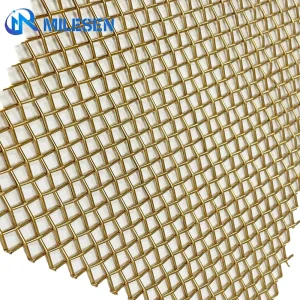
In modern sustainable architecture, the exterior building envelope is no longer just a structural barrier; it has evolved into a dynamic thermal, acoustic, and visual filter. Brass ornamental mesh systems serve as high-performance passive shading screens, reducing solar heat gain coefficients (SHGC) while ensuring optimal natural daylight transmission.
By integrating high-purity brass alloys (typically varying from 65% to 90% copper content, with zinc as the remaining balance), manufacturers can design screen solutions that offer superior natural corrosion resistance, high structural yield strengths, and long-term mechanical stability. Over time, these brass facades form a protective oxide patina that seals the metal, eliminating the need for synthetic coatings or high-impact maintenance cycles. This natural chemical evolution makes brass mesh a cornerstone material in green building frameworks, including LEED (Leadership in Energy and Environmental Design) and BREEAM certifications.
The inherent antimicrobial properties of the copper-zinc combination in brass offer a major advantage for internal applications (such as high-traffic terminal partitions and ventilation systems). Microorganisms are neutralized upon surface contact through the disruption of their cellular membranes, supporting modern health and sanitation initiatives in municipal infrastructure projects.
| Alloy Grade (ASTM) | Copper Content (%) | Zinc Content (%) | Tensile Strength (MPa) | Primary Industrial Application |
|---|---|---|---|---|
| C22000 (Commercial Bronze) | 90% | 10% | 260 - 380 | High-end exterior facades, architectural cladding panels |
| C23000 (Red Brass) | 85% | 15% | 270 - 410 | Acoustic insulation backings, decorative filtration elements |
| C26000 (Cartridge Brass) | 70% | 30% | 310 - 480 | Precision woven mesh screens, customized interior dividers |
| C27000 (Yellow Brass) | 65% | 35% | 330 - 520 | Heavy-duty structural partitions, security enclosure panels |
Providing significant structural, thermodynamic, and functional benefits to modern engineering projects globally.
Carefully engineered open area percentages ranging from 30% to 65% allow architects to precisely manage structural shade coefficients, drastically lowering HVAC cooling demands in arid climates.
Acting as sound dispersion barriers, our woven metal matrices scatter mid-to-high frequency acoustic waves, lowering ambient resonance in large industrial and commercial spaces.
Unlike coated carbon steels or anodized aluminum finishes, our alloy materials form an autonomous, self-healing oxide layer, eliminating standard refinishing costs over a service life exceeding 50 years.
The global sourcing profile for architectural and technical wire mesh demands rigorous quality control, agile manufacturing configurations, and raw material tracing. As primary OEM exporters, we run advanced weaving facilities that can process fine micro-mesh sizes as small as 500 microns alongside heavy, high-gauge structural screens.
Our custom manufacturing processes allow for bespoke variations in mesh density, wire shape (flat, round, or textured), and opening geometry (such as rectangular, square, or complex architectural weaves). By sourcing high-quality copper and zinc directly from accredited smelting partners, we protect our downstream industrial clients from material impurities. These impurities can lead to stress corrosion cracking (SCC) or unexpected discoloration when exposed to atmospheric elements.
To satisfy international engineering criteria, our products undergo verification to meet standard ASTM and EN specifications:
Dongguan Reivanta Mesh Co., Ltd. combines advanced manufacturing technology with rigorous testing standards to serve clients worldwide.
Established in 2012, Dongguan Reivanta Mesh Co., Ltd. has grown from a specialized local wire processing workshop into a prominent global supplier of high-precision metal mesh. Strategically located in Dongguan—a major hub for high-precision global manufacturing—we have expanded our reach by continuously investing in advanced automated weaving and metal forming machinery.
By 2016, we expanded our production lines to meet the strict demands of international markets, delivering tailored industrial filtration screens and security fencing systems. In 2019, we introduced automated weaving systems and expanded our internal R&D team to support custom OEM designs. By 2023, our product range had grown to cover complex architectural mesh systems, high-durability security screens, and precise alloy filtration meshes. Today, Reivanta delivers dependable, cost-effective, and fully certified custom wire mesh solutions to infrastructure, commercial, and industrial projects worldwide.
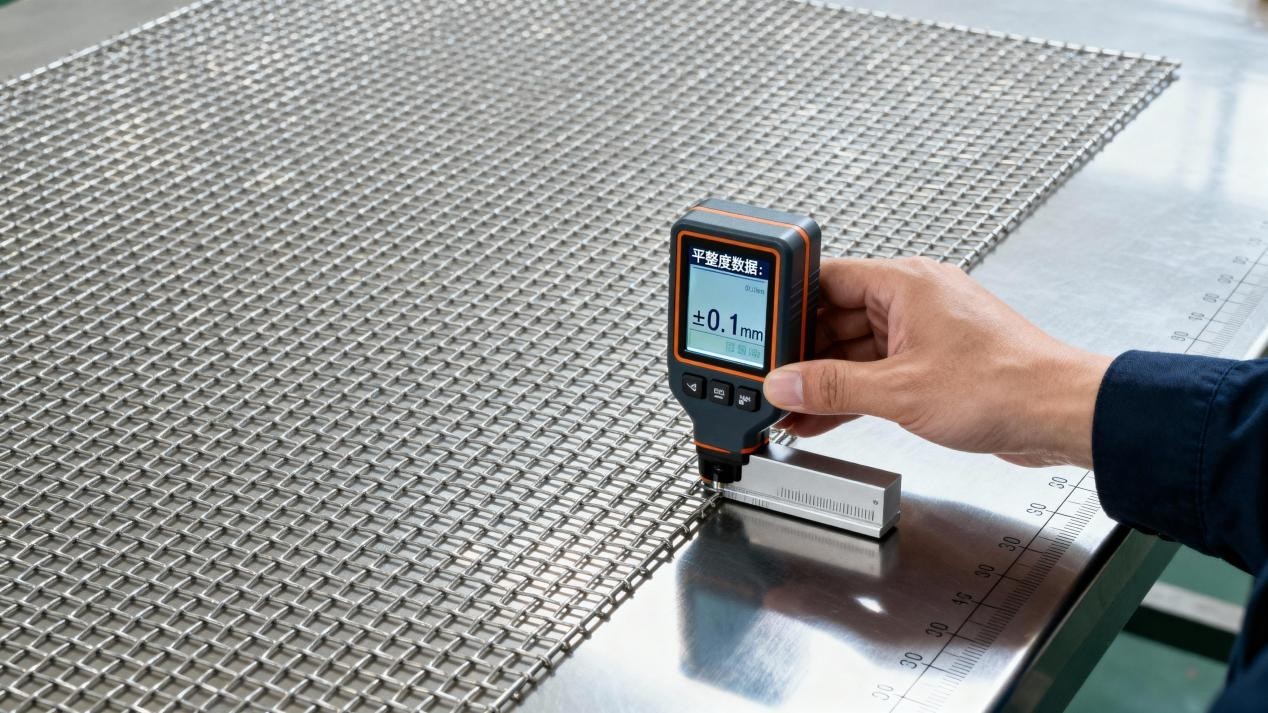

The future of industrial and architectural brass wire mesh lies at the intersection of material science, nanotechnological coatings, and structural design. Reivanta’s technical R&D roadmap targets three main industry challenges:
Architectural specifications often demand either a fully stabilized, uniform brass aesthetic or a predictable, natural aging process. To address this, we are refining chemical pre-weathering protocols alongside advanced physical vapor deposition (PVD) coating methods. For projects requiring long-term metallic gold or bronze color stability, our ultra-thin protective coatings prevent air-induced oxidation while maintaining the metallic feel of the brass.
Large-scale exterior facades installed on tall buildings face substantial aerodynamic forces. Reivanta collaborates directly with civil structural engineering firms to model drag coefficients ($C_d$) across varying wind profiles. Utilizing advanced 3D finite element analysis (FEA), we adapt the diameter, pitch, and crimping style of our wire mesh to guarantee optimal structural performance. This minimizes structural loading on support anchor systems while maintaining the architect's target visual transparency.
Modern smart cities require building envelopes that do more than provide basic protection. High-purity copper and brass meshes naturally function as effective Faraday cages, offering excellent electromagnetic interference (EMI) shielding for research centers, data hubs, and defense facilities. We are designing new hybrid systems that incorporate optical fibers and low-voltage lighting directly into the mesh structure, transforming exterior building panels into integrated media facades and architectural communication platforms.
Expert engineering answers to common inquiries regarding installation, performance under load, and material characteristics of custom brass mesh systems.
Brass alloys (copper-zinc) perform well in marine atmospheres by developing a stable, protective copper carbonate patina. To prevent dezincification (the selective leaching of zinc in high-chloride environments), we recommend using specialized alloys with higher copper content (typically above 85%, such as C22000 or C23000) or applying a marine-grade clear polymer seal coating. These measures ensure long-term mechanical and aesthetic durability.
For most commercial facade installations, an open area ratio between 40% and 55% delivers the best balance. This range provides sufficient natural ventilation for cooling towers and parking garages while shading interior spaces to lower overall solar heat gain.
Yes. By utilizing heavy-gauge wire diameters and structured crimping styles, our mesh systems can be engineered to meet standard fall-protection building regulations. We provide project-specific tension calculations and work closely with structural engineers to design boundary frames and anchor systems that can handle dynamic impact loads.
When exposed to oxygen, moisture, and ambient carbon dioxide, raw brass transitions from its original bright golden finish to a deeper amber-brown hue, eventually developing a rich green-brown patina. The rate of this patination depends on local air humidity, rainfall, and pollutant levels. We can also pre-oxidize panels in our facility to achieve a consistent bronze appearance immediately upon installation.
As a global OEM exporter, Reivanta delivers fully customized solutions. We supply mesh pre-cut to exact panel dimensions, finished with custom edge profiles, and packaged in protective, export-grade crates. All shipments include detailed material traceability records and compliance certifications to ensure a smooth customs process.
Explore our wide selection of industrial filtration meshes, heavy-duty expanded metals, and protective wire panels designed for challenging environments.
 Reivanta Mesh