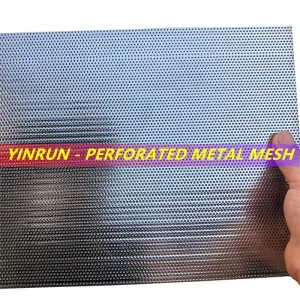
Punched metal screens, also widely classified as perforated metal sheets, serve as foundational components in modern industrial separation, architectural design, agricultural refining, and security systems. As global industries transition toward automated, high-precision processing, the demand for dimensionally stable and corrosion-resistant perforated materials has scaled exponentially. A high-quality punched metal screen is defined not merely by its holes, but by its mechanical integrity, flatness tolerance, and precise open area ratios.
Procurement engineers and industrial project managers look beyond simple pricing metrics. They demand components that resist mechanical fatigue, withstand aggressive chemical cleanings, and maintain consistent filtration integrity under high pressure. Dongguan Reivanta Mesh Co., Ltd. addresses this directly through advanced manufacturing processes, bridging the gap between raw metallurgy and specialized global application demands. By implementing strict quality-control protocols and utilizing CNC-guided turret presses, we ensure that every square meter of punched screen conforms to international structural standards.
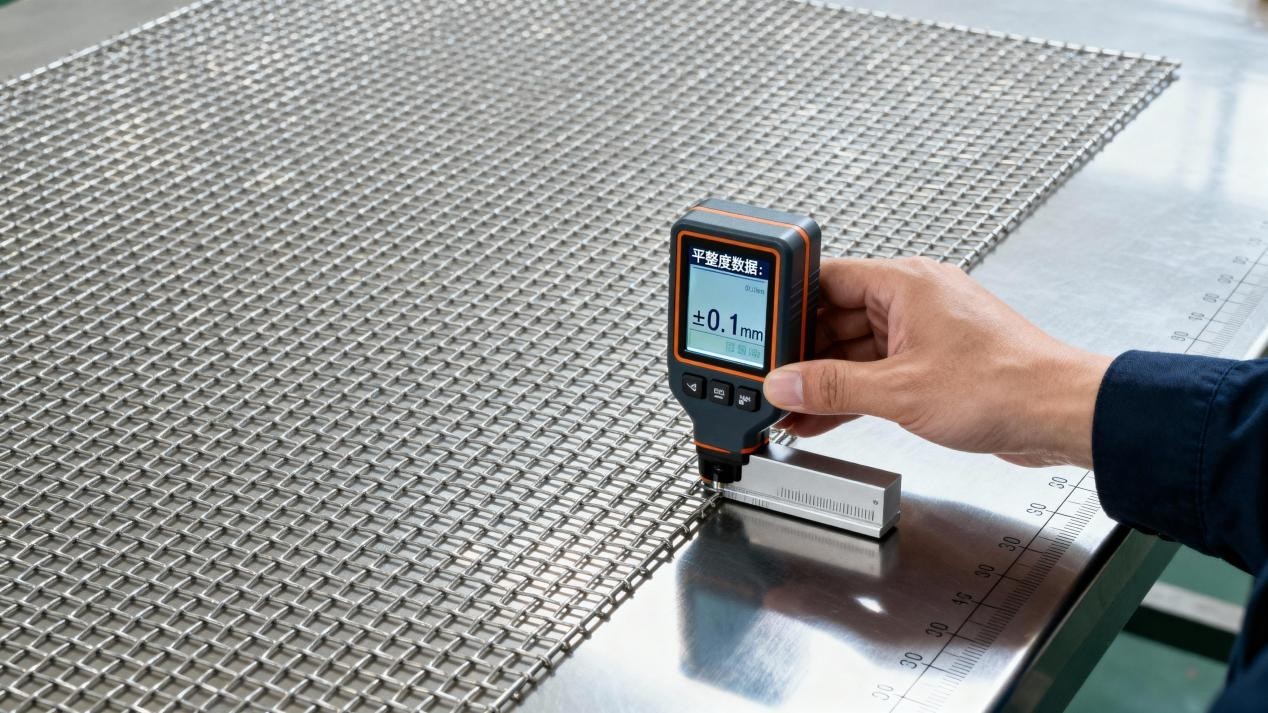
“Information Gain Advantage: Unlike traditional perforated metal which may suffer from internal stress distributions causing warping, modern CNC-guided punched screens from certified facilities undergo precise tension leveling to maintain exceptional planar tolerance down to 0.05mm.”
Selecting the appropriate alloy and perforation configuration is critical for application longevity. Below is an engineering overview of materials utilized by leading manufacturers like Reivanta for high-performance punched screens:
Grades 304/304L and 316/316L are the industry standard for chemical processing and food filtration. Grade 316 contains molybdenum, dramatically increasing its resistance to chloride-induced stress corrosion cracking.
Commonly incorporating 1000, 3000, and 5000-series aluminum. Anodized aluminum screens offer corrosion protection with minimal weight loading, making them ideal for structural cladding and acoustic panels.
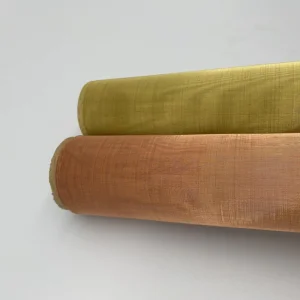
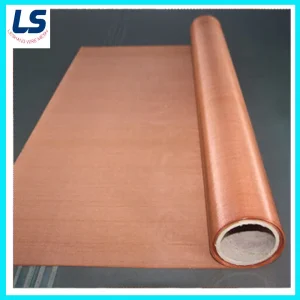
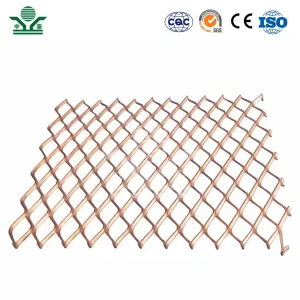
Phosphor bronze and red copper meshes are valued for specialized filtration, electromagnetic shielding (EMI/RFI), and decorative architectural screens due to their natural antimicrobial and aging characteristics.
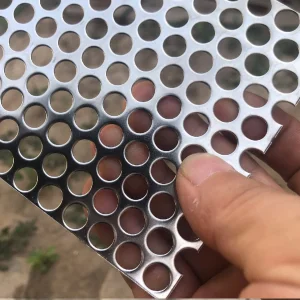
Beyond raw material selection, hole geometry determines structural performance. While round holes are the most popular and cost-effective, hexagonal punch designs maximize open area ratio (reaching up to 85%), which minimizes flow resistance in high-throughput liquid filtration systems. Slotted perforations are primarily utilized in agricultural machinery and grain grading sieves, preventing elongated seeds or particles from blinding the screen.
Procuring punched metal screens from specialized industrial hubs like Dongguan, Guangdong province, offers distinctive structural benefits. Unlike decentralized manufacturing regions, Dongguan operates a tightly integrated supply chain ecosystem. Industrial tool-and-die shops, raw alloy mills, surface treatment plants (electropolishing, anodizing, powder coating), and advanced testing laboratories operate within a 50-kilometer radius.
This proximity drastically minimizes lead times for custom tooling. For example, if a client requires a non-standard micro-needle perforation pattern (e.g., 0.5mm hole on a 1.0mm pitch in 316SS), custom tooling can be engineered, machined, and hardened within days, rather than weeks. Additionally, Southern China’s close proximity to major deep-water ports (Shenzhen and Guangzhou) guarantees efficient logistics, lowering overall landed costs for international distributors and large-scale industrial buyers.
To maintain absolute reliability in demanding environments like marine exploration, petrochemical refining, and public transit security infrastructure, punched metal screens must align with international compliance metrics. Manufacturers who prioritize E-E-A-T ensure adherence to the following criteria:
| Standard Code | Focus Area | Compliance Details & Tolerances |
|---|---|---|
| ASTM E2016 | Industrial Wire Mesh & Screens | Defines standard specifications for industrial woven and punched screens, verifying hole sizing consistency. |
| ASTM A240 / A240M | Stainless Steel Plate Materials | Specifies chemical composition (Chromium, Nickel, Molybdenum) to guarantee corrosion resistance and tensile strength. |
| ISO 9001:2015 | Quality Management Systems | Certifies that the manufacturing plant utilizes documented, repeatable QA/QC protocols across all production phases. |
| RoHS & REACH | Hazardous Substances Restriction | Ensures surface treatments (like electroplating or PVC coating) are free from lead, mercury, and other harmful chemicals. |
Quality verification involves several physical and chemical steps. First, Spectrograph Analysis (PMI Testing) is performed to confirm alloy authenticity, ensuring 316L material contains a minimum of 2.0% Molybdenum. Next, optical projectors verify margins and hole concentricity. Finally, flattening rollers neutralize internal material stress, preventing the sheets from bowing or twisting after installation.
Punched screens are utilized across a wide variety of industrial and architectural settings:
Punched aluminum and copper panels balance natural light transmission, shade structure, and acoustic absorption. Used in commercial facades, parking garage wraps, and interior acoustic baffles.
Heavy-duty stainless steel screen plates are critical for vibrating mining screen grids, petroleum sand control filters, and chemical separation centrifuges, operating under high mechanical stress.
Uniform, high-precision perforation arrays in screen plates are vital for agricultural harvesting machinery and sorting systems. They prevent crop damage while maximizing grading efficiency.
Dongguan Reivanta Mesh Co., Ltd. is a professional China wire mesh supplier specializing in industrial filtration mesh, copper mesh, and security fencing products. Located in Dongguan, a major manufacturing hub, the company is dedicated to providing high-quality metal mesh solutions for global industrial, commercial, and infrastructure applications.
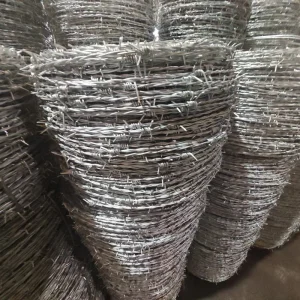
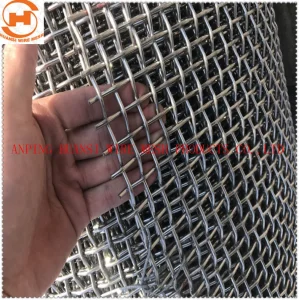
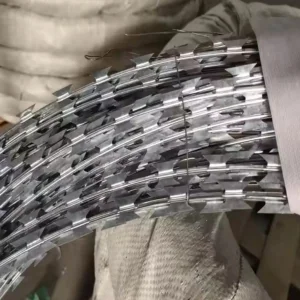
Reivanta offers a diverse product range including stainless steel filtration mesh for precision separation, copper and alloy mesh for electrical and decorative uses, and durable barbed wire and fencing systems for security protection. With advanced weaving, welding, and surface treatment technologies, the company ensures consistent quality, corrosion resistance, and long service life across all products.

Development History:
Founded in 2012, Reivanta began as a small workshop focusing on basic wire mesh processing for local industries. By 2016, the company expanded its production capabilities and entered international markets, supplying customized filtration mesh solutions.
In 2019, Reivanta introduced automated production lines and enhanced R&D capacity, enabling high-precision and large-scale manufacturing. By 2023, the company had established a comprehensive product system covering industrial filtration, decorative mesh, and security fencing. Today, Reivanta continues to grow as a trusted global supplier, committed to innovation and customer satisfaction, delivering reliable, cost-effective, and customized wire mesh solutions worldwide.
Procurement engineers must balance mechanical characteristics against cost constraints when selecting metal screens. The table below outlines the primary performance attributes of the three main wire mesh classifications:
| Performance Metric | Punched Metal Screen | Woven Wire Mesh | Expanded Metal Mesh |
|---|---|---|---|
| Aperture Stability | Excellent (Fixed solid margins) | Moderate (Wires can shift under high load) | Good (Joints are part of a single piece) |
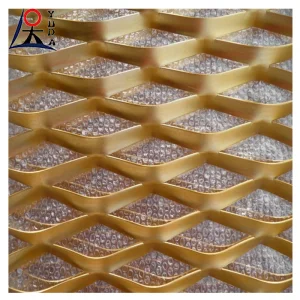
| Open Area Control | Highly customizable via punch geometry | Limited by wire diameter and weave density | Pre-determined by tool stretch factors |
| Tensile Strength | High (Intact sheet borders) | Moderate to High (Depends on wire tensile) | Moderate (Slit-and-stretched junctions) |
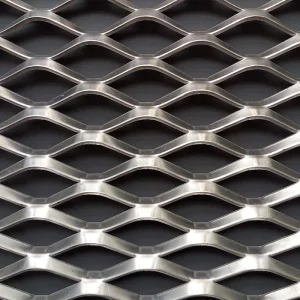
| Flow Turbulence | Low (Flat planar surface) | Moderate (Interlocking wire knuckles) | High (Angle-twisted strands) |
| Primary Application | Heavy sorting, filtration, cladding | Fine filtration, EMI shielding | Security paths, floor gratings, walkways |
Understanding the mathematical and physical parameters of perforated metals prevents procurement errors. Our engineering team has compiled answers to the most common queries:
 Reivanta Mesh