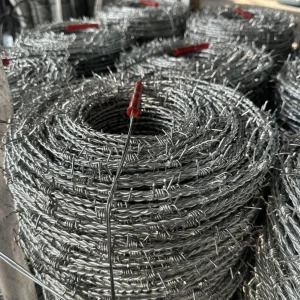
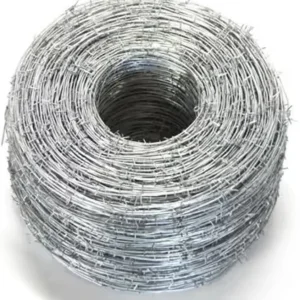
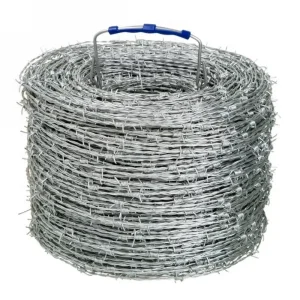
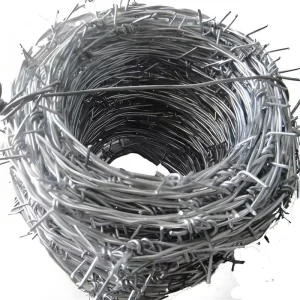
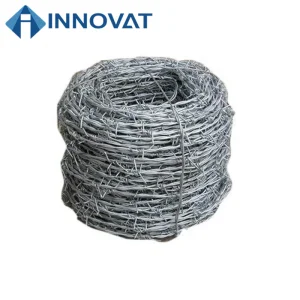
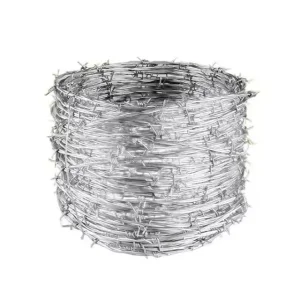
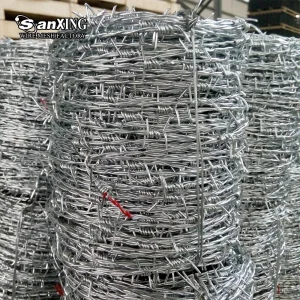
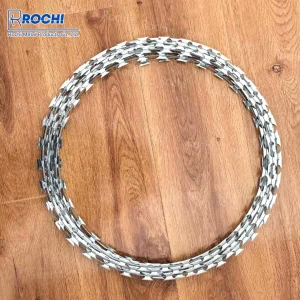
Engineered for Dominica's critical perimeters, including seaport facilities, civil structures, and high-security agricultural installations.
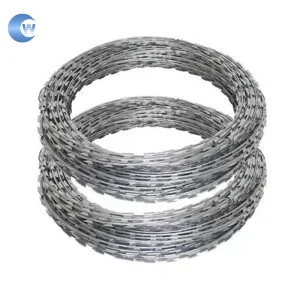
Dominica, commonly designated as the "Nature Island of the Caribbean," presents a demanding environment for structural engineering and perimeter security. The combination of intense tropical precipitation, severe microclimates, and persistent exposure to airborne saline particles from both the Caribbean Sea and Atlantic Ocean necessitates robust physical barrier solutions. Industrial projects, municipal upgrades, and private agricultural perimeters in Roseau, Portsmouth, and along the Trans-Dominica utilities corridors require wire specifications that surpass standard structural baselines.
The national transition toward climate-resilient infrastructure has changed procurement standards. Standard single-strand fencing wires are susceptible to accelerated shear stress and dynamic wind loads during tropical storms. Consequently, infrastructure administrators are prioritizing industrial-grade Double Strand Barbed Wire. The helical structure of double-strand designs provides torsional resistance, absorbing physical impacts and shifting winds without experiencing structural failure.
Coastal projects within 5 kilometers of Roseau Harbor or Douglas-Charles Airport experience high chloride deposition rates. Standard commercial galvanization (yielding 30–60 g/m² of zinc coating) can show red rust in as little as 12 to 18 months in these conditions. Reivanta’s high-tensile double strand systems utilize Class 3 heavy galvanization (≥240 g/m²) and UV-stabilized PVC coatings to resist chloride-induced pitting, extending the service life of perimeter barriers to over 20 years in maritime environments.
As a global provider, we combine localized supply chains with international manufacturing standards to deliver reliable perimeter security solutions. Operating from major manufacturing hubs, we control the production process from high-carbon wire drawing to final zinc coating deposition.
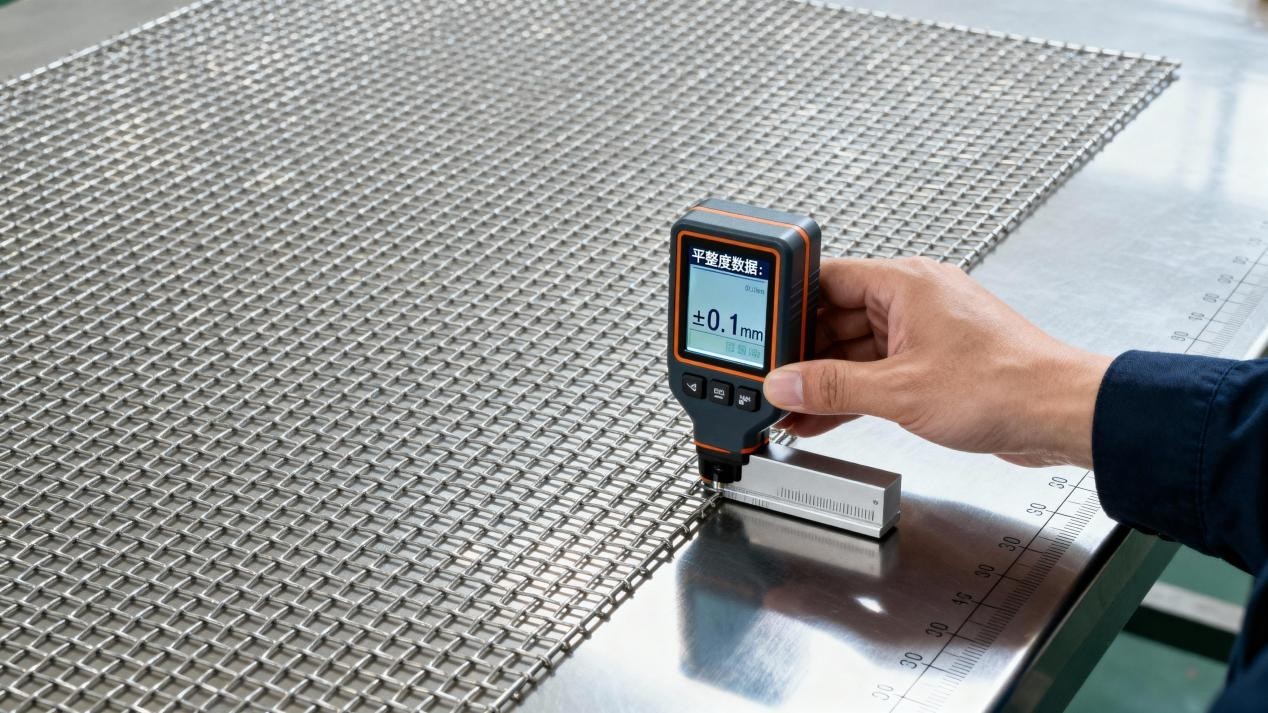
Dongguan Reivanta Mesh Co., Ltd. is a professional China wire mesh supplier specializing in industrial filtration mesh, copper mesh, and security fencing products. Located in Dongguan, a major manufacturing hub, the company is dedicated to providing high-quality metal mesh solutions for global industrial, commercial, and infrastructure applications.
Reivanta offers a diverse product range including stainless steel filtration mesh for precision separation, copper and alloy mesh for electrical and decorative uses, and durable barbed wire and fencing systems for security protection. With advanced weaving, welding, and surface treatment technologies, the company ensures consistent quality, corrosion resistance, and long service life across all products.
Development History:
Founded in 2012, Reivanta began as a small workshop focusing on basic wire mesh processing for local industries. By 2016, the company expanded its production capabilities and entered international markets, supplying customized filtration mesh solutions.
In 2019, Reivanta introduced automated production lines and enhanced R&D capacity, enabling high-precision and large-scale manufacturing. By 2023, the company had established a comprehensive product system covering industrial filtration, decorative mesh, and security fencing. Today, Reivanta continues to grow as a trusted global supplier.
Committed to innovation and customer satisfaction, Dongguan Reivanta Mesh Co., Ltd. strives to deliver reliable, cost-effective, and customized wire mesh solutions worldwide.

Understanding the mechanical properties, twist typologies, and metallurgy that protect critical Caribbean assets.
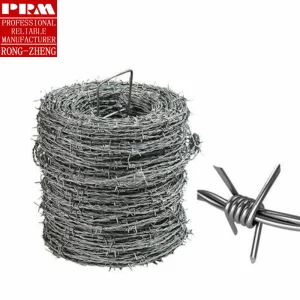
By twisting two line wires in alternating directions, we eliminate the internal torque that causes standard barbed wire to loop, kink, or unspool during installation. This helps maintain uniform tension over long spans.
Available in low-carbon steel (approx. 350-450 MPa) for ease of manual installation, and high-tensile steel (exceeding 1100-1300 MPa) which allows for wider post spacing and resists manual cutting.
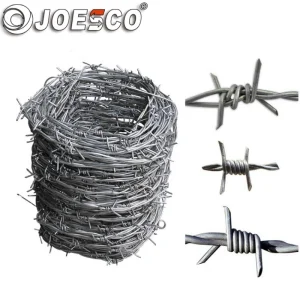
Unlike 2-point variations, our 4-point design wraps around both line wires, preventing the barb from sliding or rotating under pressure. Sharp points are cut at a 45-degree angle to provide a secure physical barrier.
Selecting the appropriate surface coating is critical for managing lifecycle costs. We offer three primary surface configurations:
Deploying targeted physical barriers to protect critical infrastructure, utility networks, and agricultural assets.
Dominica’s shift toward renewable energy sources—such as geothermal power stations in the Roseau Valley and solar arrays in industrial pockets—demands physical security systems that prevent unauthorized entry. High-voltage infrastructure requires outer boundaries constructed from non-conductive or properly grounded perimeter fencing. Applying Double Strand PVC-Coated Barbed Wire on top of heavy chain link meshes ensures utility substations remain secure from both wild animals and human intrusion, reducing down-time risk.
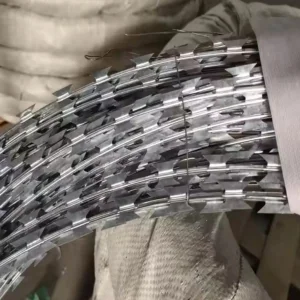
Airports and deep-water shipping terminals represent critical access points that require high-security perimeters. Douglas-Charles Airport, located on the northeast coast, is subjected to salt-laden trade winds. Standard galvanized wire degrades quickly in this environment, compromising structural integrity. Implementing Class 3 hot-dipped galvanized double-strand razor wire systems provides long-term resistance to corrosion and mechanical failure.
Managing borders for Dominica’s organic agriculture, including banana and root crop farms, requires durable, cost-effective fencing. Traditional wood or basic wire boundaries often fail under high soil moisture and local vegetation growth. Our double-strand barbed wire provides the structural strength needed to support long fencing runs, preventing boundary sag and protecting crops from intrusion.
Engineered for high-security applications, including correctional facilities and critical infrastructure boundaries.
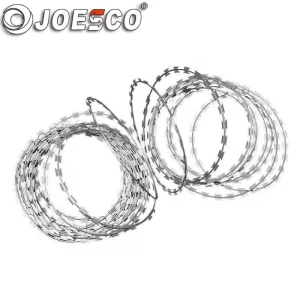
Proper installation is key to ensuring the longevity of double-strand fencing. The volcanic soil and varying typography of Dominica require specific anchoring practices:
Explore our complete range of hot-dipped galvanized and PVC-coated double-strand wire configurations.
Key information for engineering consultants, procurement managers, and security directors in Dominica.
 Reivanta Mesh